E3
Framework
A proven standard code structure, validated through nearly a decade of enterprise projects.
The 4 Pillars of E3
Built on four unshakeable principles that guarantee consistency, stability, and scalability.
Proven Architecture
Built on code structures verified through years of enterprise projects.
Field-Tested Stability
Validated in real production environments for reliability and performance.
Unified Standards
Consistent developer experience, security protocols, and maintenance practices.
Foundation of ThingsFlow
Auto-generated code is deployment-ready by default.
Why E3-Trained AI Performs Better
The Problem with Typical AI
Many generative AI tools suffer from hallucination—producing code that looks plausible but fails in reality. They often suggest nonexistent functions, unsafe exception handling, or violate security standards.
Learning from Real, Proven Code
ThingsFlow learns from the E3 Framework—a codebase built on real enterprise projects. It embodies proven standards of security, quality, and maintainability.
Code Intelligence Built on Verified Rules
Analyzes and suggests improvements based on E3's verified design principles—offering reliable, context-aware feedback rather than guesswork.

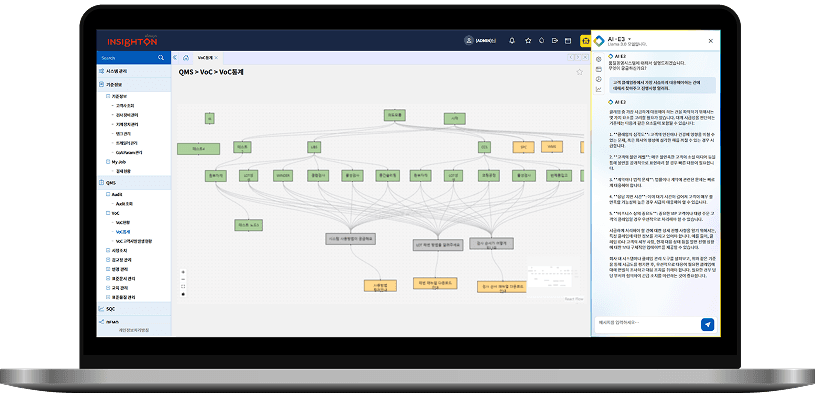
Same Question,
Different Result
ThingsFlow doesn't generate code from natural language alone.
Its capabilities are built on the E3 Framework, a structure proven through countless large-scale enterprise projects, ensuring every result is both reliable and production-ready.
Powered by verified patterns, not probabilistic guesswork
Core Features
Included in the E3 Framework
Role-based Source Structure
Auto-generation of Service, Mapper, and other role-based source structures
Granular Access Control
Fine-grained permission control by button, screen, or permission group
API Integration
Automated API setup and comprehensive call history tracking
Batch Scheduler
Robust batch scheduler configuration and execution monitoring
VS Code Integration
Seamless development tool integration via VS Code plugin
Operational Components
Built-in utilities, exception handling, and standardized logging